
How to Reduce Restaurant Food Waste in 2026

How to Reduce Restaurant Food Waste in 2026


Roxana Claudia


If you want to reduce restaurant food waste this year, this guide will cover the causes and offer ways to minimize waste and improve your business’s sustainability.
Food waste is a big problem in the restaurant industry. It impacts profits, sustainability, and efficiency. Every year, restaurants discard tons of food, leading to financial losses and environmental damage.
The good news? Reducing food waste is also good for business.
By improving inventory management, portion control, and waste reduction strategies, restaurants can lower costs, streamline operations, and attract eco-conscious customers.
Here’s what we’re going to cover in this article:
- What restaurant food waste is and why it matters.
- Common causes of food waste in restaurants.
- How restaurants typically dispose of food waste.
- Practical strategies to reduce food waste in 2026.
Get Your Restaurant Business Online With Orderable
Orderable is a user-friendly WordPress plugin that adds online ordering to your restaurant website.
Add your dishes, create your online ordering menu, customize your delivery schedule, and manage orders with ease.


What is restaurant food waste?
Restaurant food waste is any edible or inedible food discarded during food preparation, cooking, or after being served.
Types of restaurant food waste:
- Pre-consumer waste. Ingredients that spoil before use, over-prepared food, and food scraps from prep.
- Post-consumer waste. Leftover food from customer plates, buffet waste, and expired menu items.
- Packaging waste. Excessive plastic, paper, and single-use containers.
Every year, Americans waste billions of pounds of food. According to the Food and Agriculture Organization (FAO), nearly one-third of the world’s food is lost or wasted.
In the restaurant industry, this means financial losses and increased methane emissions from wasted food in landfills.
What causes restaurant food waste?
Food waste in restaurants is often the result of poor planning, operational inefficiencies, and customer habits.
Let’s go through some of the most common reasons in detail:
1. Overproduction and inaccurate demand forecasting
One of the most significant contributors to restaurant food waste is overproduction. This is when kitchens prepare more food than is needed.
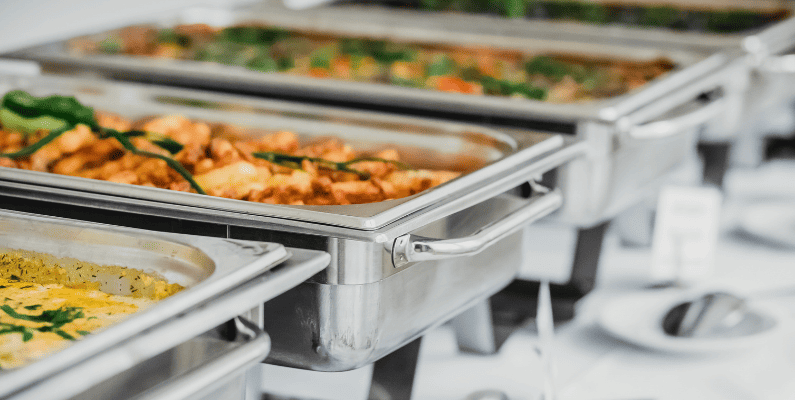
Preparing too much food leads to spoilage and discarded leftovers
Restaurants often prepare extra food to avoid running out during peak hours, ensure customer satisfaction, or keep buffets and displays looking full.
While these intentions are good, producing too much food results in high levels of spoilage and waste. For example, in a buffet-style restaurant, chefs may prepare large trays of hot food in anticipation of customer demand.
However, if foot traffic is lower than expected, food safety regulations will require much of that food to be discarded at the end of the day.

Lack of historical sales data analysis results in overordering ingredients
A major cause of overproduction is poor demand forecasting. Many restaurants don’t analyze sales data, seasonal trends, or customer traffic, leading to overestimating food prep.
For example, a casual restaurant expecting a busy Friday might prepare extra steak and seafood. But if bad weather or a local event slows traffic, much of that perishable food goes to waste.
Better demand forecasting helps restaurants cut food waste, save money, and support sustainability. Commercial kitchens waste between 4% and 10% of the food they purchase before it ever reaches a customer’s plate.

2. Poor inventory management
Poor inventory management contributes to restaurant food waste, leading to spoilage, overordering, and financial losses.
Ingredients expire before they’re used due to disorganization
Disorganized kitchens often lose track of ingredients. This results in expired or spoiled food being discarded, leading to unnecessary food loss and higher operating costs.
For example, a restaurant might order a fresh batch of leafy greens and dairy products without realizing there’s already an older supply in the refrigerator.
If these ingredients aren’t used before expiration, they spoil, adding to the restaurant’s food waste problem.
No first-in, first-out (FIFO) system, leading to forgotten or wasted stock
Older ingredients get pushed to the back and forgotten without a First-In, First-Out (FIFO) system, leading to spoilage and waste.
For example, if new milk cartons are placed in front of older ones in a fast-casual restaurant, staff will use the new stock first. Causing the older milk cartons to expire.
Better inventory management helps restaurants cut costs, reduce waste, and serve fresher meals, improving profitability and sustainability.

3. Large portion sizes
Oversized portion sizes are a significant cause of restaurant food waste, as customers often leave food uneaten or only partially consumed.
Oversized meals result in uneaten food returning to the kitchen
Many restaurants serve generous portions to attract customers and compete with other eateries. However, when customers receive more food than they can realistically eat, a significant amount goes in the trash.
For example, a customer orders a large plate of pasta with bread and salad in an Italian restaurant. While they might enjoy the meal, they may only eat half before becoming full, leaving the rest uneaten.
On average, a half-pound of food is wasted per meal in restaurants, including kitchen and plate waste.
Customers often leave food behind due to generous serving sizes
Because of food safety regulations, the restaurant cannot reuse or repurpose that food, meaning it goes straight to the waste bin. This waste contributes to landfills, methane emissions, and overall climate change.
By right-sizing portions, restaurants can minimize waste, lower food costs, and create a better dining experience for their customers.

4. Spoilage due to improper storage
One of the leading causes of restaurant food waste is spoilage, which happens when ingredients expire or deteriorate before they can be used.
Incorrect refrigeration causes premature spoilage
Keeping food at the correct temperature is critical to preventing spoilage, but many restaurants fail to monitor their refrigeration and freezing units properly.
To remain fresh, perishable items such as dairy, meat, and seafood require specific temperature ranges. If refrigerators or freezers are not cold enough, food can deteriorate faster, leading to waste.
For example, milk and cheese should be stored at or below 40°F (4°C), but if a restaurant’s fridge is running just a few degrees warmer, these dairy products can sour days before their expiration date.

Lack of temperature monitoring and proper food rotation leads to unnecessary waste
Many restaurants rely on manual temperature checks, missing fluctuations that cause food spoilage.
If a fridge malfunctions overnight, perishable food can become unsafe, leading to tons of waste. For example, without real-time monitoring, a power outage could spoil fresh seafood, forcing the restaurant to discard hundreds of dollars in ingredients.
Automated temperature tracking helps prevent spoilage, cut waste, and save money, ensuring a more efficient and sustainable kitchen.
By prioritizing proper food storage, real-time temperature monitoring, and inventory organization, restaurants can reduce spoilage, waste, and costs while running a more sustainable and efficient kitchen.

5. Menu inefficiencies
A restaurant’s menu design significantly affects the amount of food waste it generates. An inefficient menu (one with too many dishes that require unique ingredients or ingredients used in only a few recipes) often leads to spoilage and unnecessary food loss.

Too many menu items require unique ingredients, leading to spoilage
One of the most common menu inefficiencies is offering too many dishes that require distinct ingredients rather than designing a menu with overlapping components.
As a result, some ingredients spoil before being fully utilized, leading to food waste that could have been avoided with a more strategic menu design.
A restaurant with ten pasta dishes requiring different sauces, proteins, or vegetables may struggle to sell enough of each dish to prevent ingredient waste.

Ingredients with limited use that don’t appear in multiple dishes
Another significant menu inefficiency is stocking ingredients in only one or two dishes. When a restaurant purchases a specialized ingredient that doesn’t appear in various menu items, there’s a high chance that excess food will go to waste.
For example, if a seafood restaurant adds a truffle-infused scallop dish but demand is low, unused truffles will expire and be discarded, wasting money and food.
A well-designed menu helps reduce waste, boost profits, and support sustainability while keeping a menu diverse and appealing.

6. Customer behavior and food preferences
Customer preferences and eating habits play a significant role in the amount of food waste generated by restaurants.
Special requests or dietary preferences lead to discarded food
Many customers have nutritional preferences like gluten-free, vegan, or dairy-free diets. While restaurants must accommodate these needs, it often leads to food waste when ingredients are removed from dishes.
A steakhouse customer might order a burger without the bun, cheese, or sauce, but these ingredients are still plated and then discarded.
Similarly, if a dish is prepped with onions or tomatoes and a customer requests removal, they can’t be reused and end up as food waste.

Customers ordering large meals and not finishing them
Large portions are a significant cause of restaurant food waste. Many restaurants serve oversized meals to meet customer expectations and stay competitive, but leftovers often go uneaten and end up in the trash.
A casual restaurant might serve a large pasta dish with breadsticks and salad. While it seems like a good value, it’s often too much food, leading to waste since restaurants can’t re-serve uneaten meals.
By offering flexible portion sizes, restaurants can reduce waste, cut costs, and create a more sustainable dining experience while keeping customers satisfied.

How do restaurants typically dispose of food waste?
Restaurants handle food waste differently, but some methods are far more sustainable than others. Let’s see what actions you can take against food waste.
1. Landfills (least sustainable option)
For many restaurants, the default method of disposing of food waste is simply throwing it into the trash, which ends up in landfills.
Millions of tons of restaurant waste are dumped into landfills every year, accelerating environmental degradation and harming sustainability efforts.
According to the U.S. Environmental Protection Agency (EPA), food waste is the most significant contributor to U.S. landfills, worsening global warming and environmental degradation.

2. Composting
Composting is one of the most effective ways for restaurants to reduce food waste, minimize their environmental impact, and contribute to a more sustainable food system.
Instead of sending food scraps and organic waste to landfills, where they contribute to methane emissions, composting allows food waste to break down naturally and be repurposed into nutrient-rich soil.
This process benefits the environment, helps restaurants cut waste disposal costs, and enhances their reputation as eco-conscious businesses.

3. Food donations
Many restaurants throw away food that could help people in need. Food donations offer restaurants a sustainable and socially responsible way to reduce food waste while helping needy communities.
Instead of discarding excess food, restaurants can donate surplus meals, unused ingredients, and unserved perishable items to food banks, shelters, and nonprofit organizations.
This reduces the amount of food sent to landfills and addresses food insecurity, benefiting individuals and families who struggle to access nutritious meals.
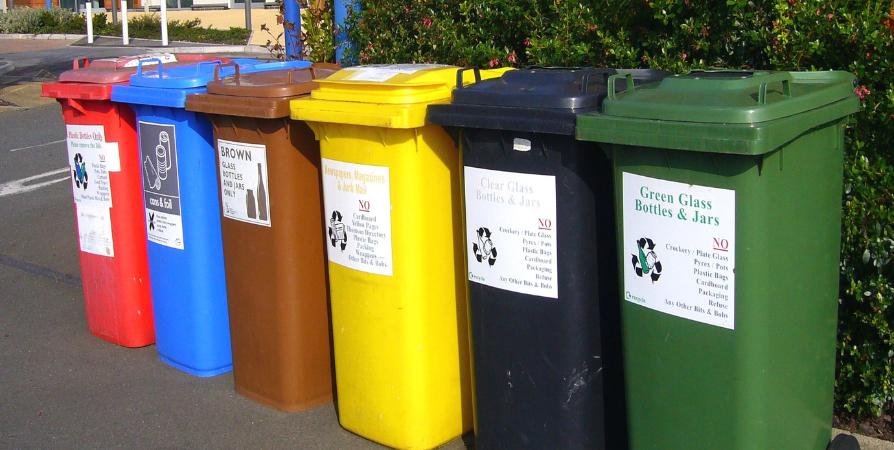
4. Recycling and repurposing waste
Recycling and repurposing food waste allows restaurants to significantly reduce landfill contributions, lower disposal costs, and create a more sustainable and efficient kitchen.
Instead of throwing away cooking oil, vegetable scraps, or unused ingredients, restaurants can find ways to reuse and recycle these materials, which benefits both the environment and the business.
Many restaurants have begun adopting waste reduction strategies that transform food waste into valuable products, minimizing their environmental footprint and cutting costs.
5. Food waste reduction programs
Food waste is a major financial and environmental challenge for the restaurant industry, but modern technology and data-driven solutions are helping businesses manage their waste.
Waste reduction programs allow restaurants to track, analyze, and minimize waste, improving profit margins, sustainability, and operational efficiency.
By using food waste tracking systems, restaurants can identify waste patterns, adjust inventory management, and implement strategic changes that prevent unnecessary food loss.

What strategies are effective for minimizing food waste in restaurants?
Reducing restaurant food waste requires a mix of technology, process improvements, and food waste reduction initiatives.
1. Implement smarter inventory management
Effective inventory management is one of the most essential strategies for reducing restaurant food waste and improving profitability.
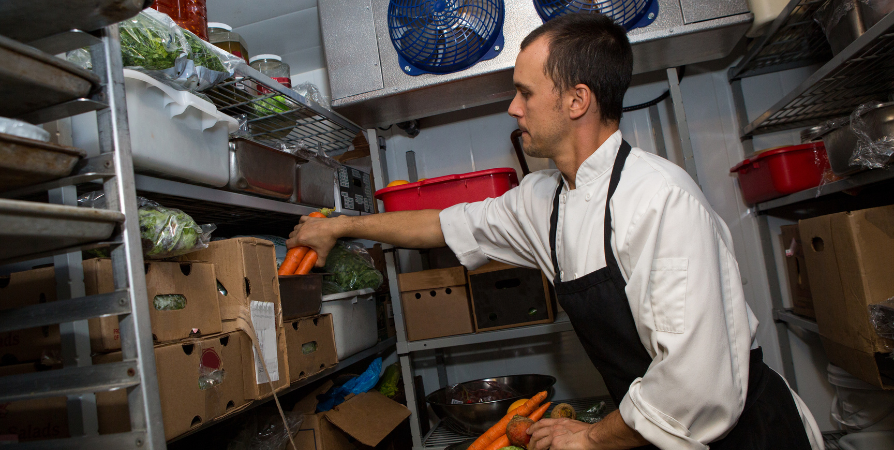
Use first-in, first-out (FIFO) storage to prevent food spoilage
The FIFO method is a simple but highly effective way to reduce food spoilage. This system ensures that older ingredients are used before newer ones, preventing food from being forgotten in storage and expiring before it can be used.
Without FIFO, perishable ingredients often get pushed to the back of refrigerators, pantries, and freezers, leading to tons of food waste that could have been prevented.
By implementing FIFO, employees are trained to rotate stock properly, ensuring that nothing expires unused.
Utilize inventory tracking software to monitor stock levels
While FIFO helps prevent spoilage, restaurants also need real-time inventory tracking. Many businesses still rely on manual inventory checks, which can lead to errors, overordering, and stock mismanagement.
Inventory management software tracks ingredient usage, alerts staff when stock levels are low or approaching expiration, and even integrates with Point-of-Sale (POS) systems to analyze sales trends.
By adopting intelligent inventory management techniques, restaurants can significantly reduce food waste, cut costs, and run a more sustainable and profitable business.

2. Improve portion control
Portion control is one of the most effective ways for restaurants to reduce food waste, manage costs, and improve customer satisfaction.
Offer different portion size options to customers
One simple yet effective strategy for portion control is to provide multiple portion size options. This allows customers to select a serving size that matches their appetite, reducing the likelihood of uneaten food.
Almost half (48%) of diners cite portion size as the primary reason for leaving food uneaten when dining out, leading to significant plate waste.
Many restaurants have successfully implemented half-portions, small plates, or shareable dishes, giving customers more control over their meal size.
Use premeasured serving tools to standardize portions
Another essential method for improving portion control is using premeasured serving tools, such as portion scoops, ladles, and kitchen scales.
These tools help standardize portion sizes, ensuring that every dish is consistent while preventing over-serving.
By implementing portion control strategies, restaurants can create a more efficient, cost-effective, and environmentally responsible dining experience—ensuring that food is enjoyed rather than wasted.

3. Optimize menu design
Menus that feature too many unique ingredients or dishes that rely on rarely used items often lead to spoilage, as these ingredients may not be used frequently enough before they expire.
Limit ingredients that don’t appear in multiple dishes
One of the most significant contributors to restaurant food waste is stocking ingredients only used in one or two dishes.
When a restaurant carries an ingredient that doesn’t appear in multiple menu items, there’s a higher risk that it won’t be used before it spoils.
This leads to waste and increases inventory costs, as the restaurant must continuously restock ingredients that don’t contribute to multiple revenue-generating dishes.

Feature seasonal ingredients to minimize waste
Another effective way to reduce food waste is by incorporating more seasonal ingredients into the menu. Seasonal produce is fresher, more affordable, and easier to source locally, which helps minimize waste by ensuring ingredients are used at their peak quality.
When restaurants rely on out-of-season ingredients, they often purchase imported or heavily processed items, which can spoil faster due to longer supply chains.
By optimizing menu design, restaurants can significantly reduce food waste, improve sustainability, and increase profitability, all while offering customers fresh, flavourful, and well-balanced dishes.

4. Use food waste tracking technology
One of the most effective ways restaurants reduce food waste is by utilizing innovative tracking technology.
Many restaurants unknowingly waste tons of food due to poor inventory management, overproduction, and portioning issues.
Install smart waste tracking systems that monitor discarded food and identify trends
Food waste tracking technology helps restaurants quantify and categorize the food they throw away. These systems often include smart sensors, digital scales, and AI-powered software that monitor everything from spoiled ingredients to plate waste.
If a particular dish is frequently thrown away half-eaten, the restaurant may need to adjust portion sizes or modify the recipe to match customer preferences better.
Analyze data to adjust ordering and portion sizes accordingly
One of the most significant benefits of food waste-tracking technology is its ability to optimize ingredient ordering and portion control.
Many restaurants struggle with over-ordering ingredients, leading to spoilage and unnecessary waste. By analyzing real-time waste data, businesses can adjust purchasing habits and prevent excess inventory from going bad before it is used.
By integrating food waste tracking technology, restaurants can take a proactive approach to waste management, leading to more intelligent purchasing, better portion control, lower costs, and a more sustainable business model.

5. Train staff on food waste reduction
One of the most effective ways for restaurants to reduce food waste is by training their staff on best practices for storage, food prep, and waste minimization.
Educate kitchen staff on proper storage, prep techniques, and waste reduction strategies
Proper food storage is essential for preventing spoilage and extending the shelf life of ingredients. Many cases of food waste occur because ingredients are not stored at the right temperature, left uncovered, or not rotated correctly.
Staff should be trained to follow the First-In, First-Out (FIFO) method, which ensures that older ingredients are used before newer ones. This prevents forgotten food from spoiling in the back of refrigerators or dry storage areas.
Encourage creative repurposing of food scraps (e.g., turning vegetable trimmings into broth)
Another powerful waste-reduction strategy is repurposing food scraps into new menu items, stocks, sauces, or garnishes.
Many vegetable trimmings, meat bones, and other leftovers can create flavourful broths, soups, and sauces, preventing unnecessary waste while adding value to the menu.
By investing in staff education, restaurants can significantly reduce food waste, improve efficiency, and boost profits while creating a more sustainable and responsible kitchen environment.
6. Offer takeout incentives for leftovers
One of the simplest and most effective ways for restaurants to reduce food waste is by encouraging customers to take their leftovers home.
Provide eco-friendly takeout boxes and encourage customers to take leftovers
Many customers hesitate to ask for a takeout container because they feel uncomfortable carrying leftovers or assume the food won’t taste as good later.
However, by actively promoting takeout as a standard practice, restaurants can normalize the habit and make it easier and more appealing for customers to participate.
One way to encourage takeout is by using high-quality, eco-friendly packaging that keeps food fresh without harming the environment.
Offer discounts on future visits for customers who minimize plate waste
Another effective way to reduce plate waste is rewarding customers who finish their meals or take their leftovers home.
Small incentives, such as discounts on future visits, loyalty points, or a free small appetizer on their next order, can motivate diners to be more mindful about reducing waste.
By implementing takeout incentives and waste-conscious rewards, restaurants can create a win-win solution: reduce waste and costs while giving customers more control over their meals and spending.
7. Establish food donation partnerships
Partnering with food banks and nonprofit organizations is one of the most impactful ways for restaurants to reduce food waste while addressing food insecurity in their communities.
Work with food banks and non-profits to donate surplus meals
One of the most effective ways to minimize food waste is to collaborate with local food banks, shelters, and community organizations that distribute surplus food to people facing food insecurity.
Restaurants regularly donating surplus food reduce waste and disposal costs and gain positive community recognition.
Many consumers actively support businesses engaged in social responsibility initiatives, and participating in food donations can enhance a restaurant’s brand reputation.
Offer “pay what you can” meals for near-expiring food
Another innovative way to reduce food waste while making meals accessible to a broader audience is offering “pay what you can” options for food nearing its expiration date.
Instead of throwing away perfectly good ingredients that may not be used in time, restaurants can offer them at a reduced price or through a donation-based model, ensuring that the food is consumed rather than discarded.
With minimal effort, restaurants can transform food waste into meaningful contributions, proving that sustainability and social responsibility go hand in hand.
8. Compost food scraps
Composting is one of the most effective ways for restaurants to reduce food waste while promoting environmental sustainability.
Set up an in-house composting system or partner with a local composting service
For restaurants with the space and resources, an in-house composting system is a great way to manage organic waste and repurpose food scraps.
A restaurant can collect fruit and vegetable peels, coffee grounds, eggshells, and other biodegradable materials in compost bins instead of throwing them away.
Over time, these materials break down naturally, creating fertile compost for gardens, farms, or landscaping.
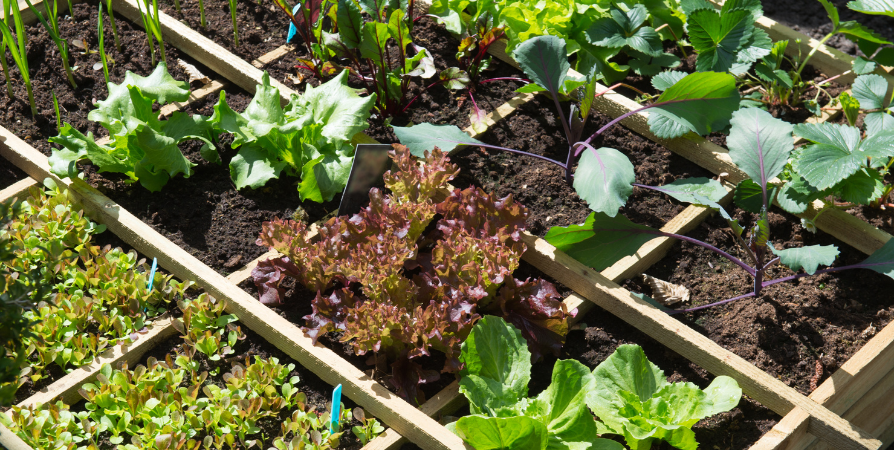
Use composted material for restaurant-owned gardens
For restaurants that don’t have the space or resources to manage in-house composting, working with a commercial composting service is an excellent alternative.
Many cities now have organic waste collection programs, where composting companies pick up food waste regularly and process it at large-scale composting facilities.
By incorporating composting into their waste management strategy, restaurants can reduce food waste, lower costs, and create a positive environmental impact while enhancing their reputation as a sustainability-focused business.
Learn how to manage restaurant food waste today
Reducing restaurant food waste is essential for cutting costs, improving sustainability, and running a more efficient business.
By implementing inventory management improvements, portion control, and donation programs, restaurants can reduce emissions, limit food loss, and positively impact their bottom line and the planet.
Take action today by implementing smarter inventory tracking, partnering with a food donation program, or starting a waste audit to identify key problem areas.
By making small changes, restaurants can reduce food waste, help fight food insecurity, and contribute to a more sustainable food system.
Get Your Restaurant Business Online With Orderable
Orderable is a user-friendly WordPress plugin that adds online ordering to your restaurant website.
Add your dishes, create your online ordering menu, customize your delivery schedule, and manage orders with ease.
Roxana Alexandru is a self-employed instructional designer and content creator specializing in corporate training, e-learning, technical articles, and scripting. She has over a decade of experience working in multiple industries, such as Finance, IT, and product management, to name a few, which gives her a unique perspective on content creation. She has also written extensively on being an introvert, with many articles featured on Introvert, Dear. She is passionate about self-help, personal growth, and seeing life through various lenses. When she’s not thinking about writing, she’s venturing outside with her two kids and husband, often traveling to new places.
Don’t miss out on the latest Orderable news!
Sign up for our newsletter to receive the latest news from the blog, you’ll get pinged every week with a digest of the latest updates.
[fluentform id=”6″]

Related Articles
How to Build Hype for Your New Menu Launch (In-House & Online)

9 of the Best Online Ordering Systems for Restaurants (2026)
7 Tips for Crafting the Perfect WooCommerce Restaurant Menu
Get Your Restaurant Online With Orderable
The WooCommerce plugin designed to help restaurants take orders online – with no added fees!
View Pricing