


Gina Lucia

Looking to put together a coffee shop business plan in 2026? This guide will walk you through how to write the main sections of a business plan to help shape your shop idea on paper.
Writing a thorough coffee shop business plan is essential to ensuring you do everything right and avoid costly mistakes. Many people make this process more complicated than it needs to be, but our aim in this guide is to make it a little simpler.
We’ll break down step-by-step every section you need to know to write an effective and practical coffee shop business plan.
Here’s what we’ll cover:
- How to write a business plan for a coffee shop.
- The 8 sections of every successful coffee shop business plan.
Ready to map out your coffee shop’s success? Let’s get into it.
How to put together a coffee shop business plan (step-by-step)
The best way to write a coffee shop business plan is in chunks. Your plan can be broken down into clear sections where you can focus on one section at a time, think it through, and clearly articulate your thoughts and actions.
If you hit a temporary wall, you can move on to the next section or get help. This way, the full plan comes together without you getting overwhelmed by writing the document.
So, what should go into a coffee shop business plan? Here are the key sections you should include.
Summary of your coffee shop business plan sections:
Scroll down to see each of these in detail.
1. Executive summary
This first section should be a summary of your coffee shop business plan. Writing it allows you to describe what is in the entire document in one or two pages. This includes your business name, concept, goals, objectives, strategies, and other relevant information.
The executive summary should highlight key business information in an easy-to-scan format as follows:
Business name and the purpose
You can begin by giving the name of your coffee business. Then, state your reasons for writing your business plan.
For example, you could say that the purpose of your plan is to secure a certain amount of capital or private equity funding.
Your business concept and vision
Here, you’ll describe your coffee shop concept and vision in a few sentences. You can briefly state the type of coffee business you run and what makes your business unique.
For example, you could say you’re a mobile coffee truck that serves locally-sourced coffee beans and rotates locations based on high foot traffic.
Then, follow this with your vision, the bigger goal you hope to achieve as a business owner. This could be serving coffee in every corner of your community, opening more locations, etc.

Mission statement
A mission statement should describe what you’re planning to do to achieve your vision or dream.
A short sentence or paragraph is enough to explain this purpose clearly. Why are you opening your coffee shop, and what are you here to do for your customers or community? Do it in the present tense, though.
Objectives, goals, and strategies
Next, explain your goals and objectives. These goals should be practical targets that show how you’ll work toward your mission and vision.
How will you contribute to the community around you? Will your menu change frequently? How about the service? Generally, the goals could mainly focus on your customers and their experience or satisfaction.
You can also list the key success factors and activities that will help you achieve your goals.
For instance, this can be your ability to:
- Choose the best location(s).
- Keep variable and overhead expenses as low as possible.
- Or, build high market visibility through ads or brand building, etc.
Need help coming up with achievable goals for your new business? Take a look at our guide on how to create, track, and achieve restaurant goals.
Give an overview of your online strategy:
Your online strategy could be written in a section of its own, so it’s easily scannable.
Summarize how you’ll leverage your online presence to reach and attract a new customer base. For example, this might involve:
- Using a website where you’ll list your menu.
- Launching a social media or email campaign to promote your shop, etc.
- Online ordering or delivery through apps.
If you rent a retail space, other strategies to build hype around your business include chalkboard announcements or signs large enough to be read from the street. Consider leaving comment cards on each table to collect feedback, etc.
Let’s move on to the description of your business.
2. Company description
Use your company description to tell people about your business, who’s behind it, and why you are the right person to run it.
You can also get into what makes your business model special and unique from others. What you should know, though, is that your company’s description is a lot less about what you want your business to “be like” and more about what “you’re like.” You’re pitching yourself, your experience, and your ability here.
Next, your business structure.

Business structure and its location
Which legal entity do you choose for your coffee shop business? Is it a sole proprietorship, a partnership, an LLC, or a corporation? Then, go ahead to explain why you chose that structure.
For instance, let’s say your business name is Brew Spot. You can say that “Brew Spot has selected the sole proprietorship as its formal legal entity. This structure was chosen because of its operational simplicity.
Although this structure exposes us to unlimited liability, we’ll apply risk management and insurance protection to offset the risk.”
What other information can you include here?
Other information you can provide includes:
- Indicate if you’re a startup or what it is you are.
- If you’re a startup venture, indicate your proposed starting date and what you aim to achieve with your coffee shop business plan in a sentence.
- Give the location of your business and why you chose that location. Was it because of the community, foot traffic, or maybe there’s no coffee house nearby? The reason you give should be crystal clear and direct.
- etc
Ownership and management details
What is the team behind the business?
You can attach the resumes of your staff, baristas, and management team. Share a little about the coffee shop owner(s) and their experience in the coffee industry. Focus mostly on their background, qualifications, and roles.
- Who is responsible for your business operations?
- Who will handle your finances and how?
- etc
Concept and ambiance
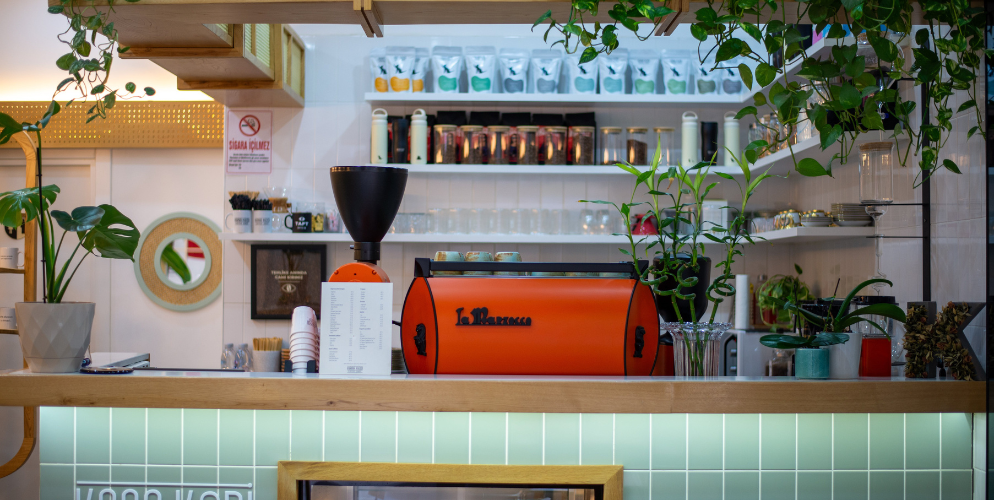
Describe the vibe and atmosphere of your coffee shop. Talk about what it looks and feels like to be in it. What are the unique aspects of your space?
Is it a cozy spot for locals to hang out and chat? Does it have art hanging on the walls?
If possible, provide a blueprint of your dining room, kitchen, and other areas. Do it briefly, though. For example, you can say that your shop consists of a 20-by-20-foot dining room, a 15-by-15-foot kitchen, two bathrooms, and a storage room in the back.
Talk about your coffee shop concept, too. Are you a coffee bar, kiosk, or coffee house? Be clear about the type of coffee business you’re running. What’s so unique about it? You can connect this with your unique selling points.
Unique selling points (USPs)
A unique selling point (USP) sets your coffee business apart from the rest. It tells customers why they should buy a cup of coffee from you instead of your competitors.
So, ask yourself, what is something unique about your business that you stand by? This is what you’ll become known for.
For example, it could be that you serve specialty coffee that’s hard to find elsewhere.
- Maybe you use fresh, high-quality coffee beans from a trusted local farm.
- Or, you offer creative seasonal drinks, and bake your pastries fresh every day.
Whatever it is, your USP should reflect something you’re proud to offer and that customers will remember you for.
Overall, in your description, cover your USPs and the owner’s credentials to create confidence in potential investors and partners.
3. Market analysis
This market analysis section should show that you understand your target market, assess your location, and know your competitors. Most of this data is collected when you conduct market research to see if your business idea has a real demand and potential for growth.
Here are three subsections you can write in three or four pages.

1. Coffee industry trends and insights
What trends made you feel confident about your business idea and location?
Maybe you found that more people prefer specialty coffee over regular brews. It helps to back up a trend with real data.
For example, the National Coffee Association (NCA) found that most people under 40 are the primary drivers of this trend, and 66% prefer espresso drinks.
You might have also noticed a growing interest in sustainable and ethically sourced coffee beans. In short, this is the subsection where you talk about your coffee market insights.
Need help turning those early insights into a real marketing plan? Take a look at our guide on how to put together a restaurant marketing strategy.
Look into the local consumer and cultural habits to explain your location
How do people enjoy their coffee? Who is drinking coffee and how often? Are people buying more takeaway or dining in? Are they pairing coffee with food (e.g., pastries, sandwiches)?
- What’s the coffee culture like in your community?
- Is there a strong “coffee hangout” culture?
- Is there already a high demand for coffee in your area? What’s the foot traffic like?
Answering these questions and more concisely will help write this section.
You can also include the research methods you used and the findings, such as surveys, questionnaires, social media polls, or one-on-one interviews.
2. Target market
Here’s where you identify your primary target customer base. Will you serve students, professionals, commuters, tourists, or families? Describe the demographics you were interested in about your ideal customers: the age, income level, lifestyle, habits, etc.
Do it in paragraphs, for example.
Let’s say one of your target customers is business owners and workers. Give a compelling reason why you’re targeting them. It could be that most of them work early in the morning, so your cafe will open at that time.
Who makes up this group? They can be professionals, retail clerks, managers, laborers, etc. How will you serve and target them?
3. Competitive analysis
You can discuss your direct and indirect competitors in the competitive analysis section.
Direct competitors are other similar coffee shops in your area that offer a “similar” experience.
Indirect competitors include cafés, bakeries, or food chains that also sell coffee. Big brands like Starbucks could be a direct or indirect competitor, depending on what you offer, prices, and the customer experience.
You can use a simple SWOT analysis to break this down in a table format:
- Strengths. What are your competitors doing well?
- Weaknesses. Where do they fall short?
- Opportunities. What gaps can you fill?
- Threats. What are the challenges that your competitors pose? Check the prices, popularity, etc.
The main goal here is just to understand where you stand and how you can offer something better or different.
Need help performing a SWOT analysis for restaurants? Take a look at our guide on how to do a SWOT analysis.
This kind of marketing analysis lets you know what products to add to a sample menu.
4. Products and services
Your investors will also need to see a sample menu to know exactly what items you’ll be serving. The sample menu must be unique if you have potential investors or lenders you want to win over.
Check out our guide on 10 irresistible restaurant menu ideas to help you create and design a well-rounded menu for this section.
You can start by listing your key menu items in a table or bullet format with two or three items per category.
Menu offerings
Here are a few menu options and coffee drinks you may offer:
- Espresso drinks. Specialty latte, cappuccino, cold brew, etc.
- Non-coffee drinks. Herbal teas, matcha latte, and hot chocolate.
- Food and pastries. Freshly baked goods, sandwiches, and breakfast items.
- Specialty and seasonal offerings. Limited-time drinks and festive options.
- Merchandise. Branded coffee mugs, packaged beans, and apparel.
What you can do is give each category a name. Then, list the main menu items with a short description or price (in bullets). Of course, the choice of menu items depends on your market analysis.
Looking for solid drink menu ideas to shake things up and attract business. Read our guide on 6 creative drink menu ideas that could make it onto your coffee menu.
When it comes to services, you may offer:
- In-store orders for dine-in or takeaway.
- Online ordering for pickup or local delivery.
In your coffee shop business plan, be sure to explain when you’re open to offering these services and show how you’ll handle them. Doing this shows that you’ve thought through your daily operations and understand customer expectations.

Online ordering and local pickup
Because you’ll list your menu items on your coffee shop website, you can let customers place and pay for their coffee orders using their preferred payment gateway.
The WordPress plugin Orderable makes it easiest to set up a direct and well-optimized online ordering process.

What is Orderable
Orderable is an online ordering system that lets you take coffee orders directly on your WordPress website. This plugin allows you to take, manage, process, and fulfill orders smoothly.
Orderable is 100% commission-free. So you get to keep all the profits to yourself.

Why set up online ordering with Orderable?
Orderable streamlines the online ordering process for both you and the customer. Here are two key ways it supports your service:
Easy order customization
Orderable is a mobile-friendly platform where your customers can easily browse your menu items and order on their smartphones. More specifically, it allows them to easily pick an order and personalize their coffee just the way they like it using add-ons.
They can also leave a note or a special instruction for the kitchen as they check out.
Each add-on costs an extra fee, which can boost your profit margin by increasing the average order value. Plus, Orderable allows you to customize your menus with colors, fonts, high-quality images, prices, descriptions, product labels, allergens, nutritional info, etc., using our ready-made layouts.
Set up flexible pickup and delivery options
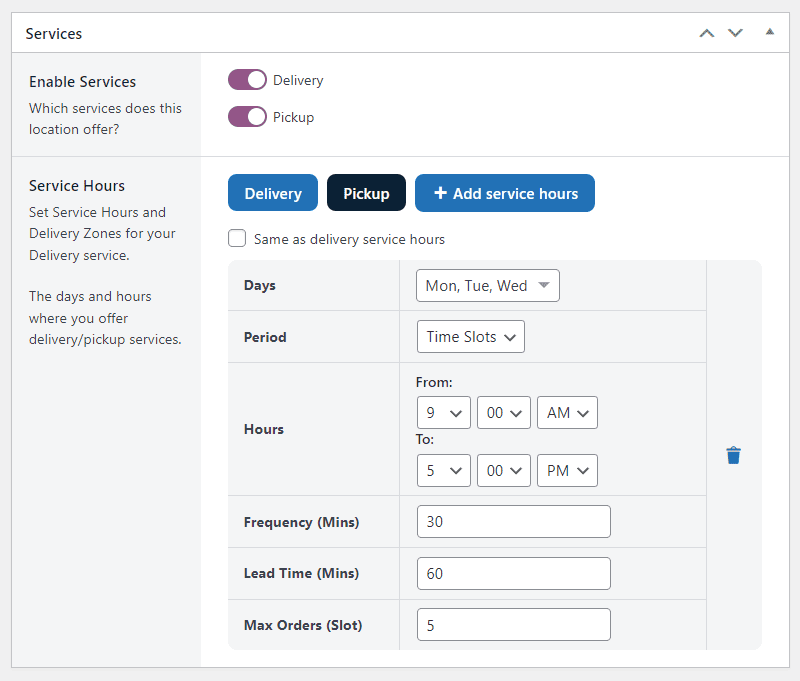
With Orderable, you can offer two types of online ordering services to manage your order flow:
- Local pickup for customer who want to drop by and pick up their order later.
- Local delivery for those who want their coffee orders delivered to their address.
You will be able to set up the days and business hours when you’re open. The management team can also control the number of orders you receive using time slots. Other delivery options available include same-day or ASAP deliveries.
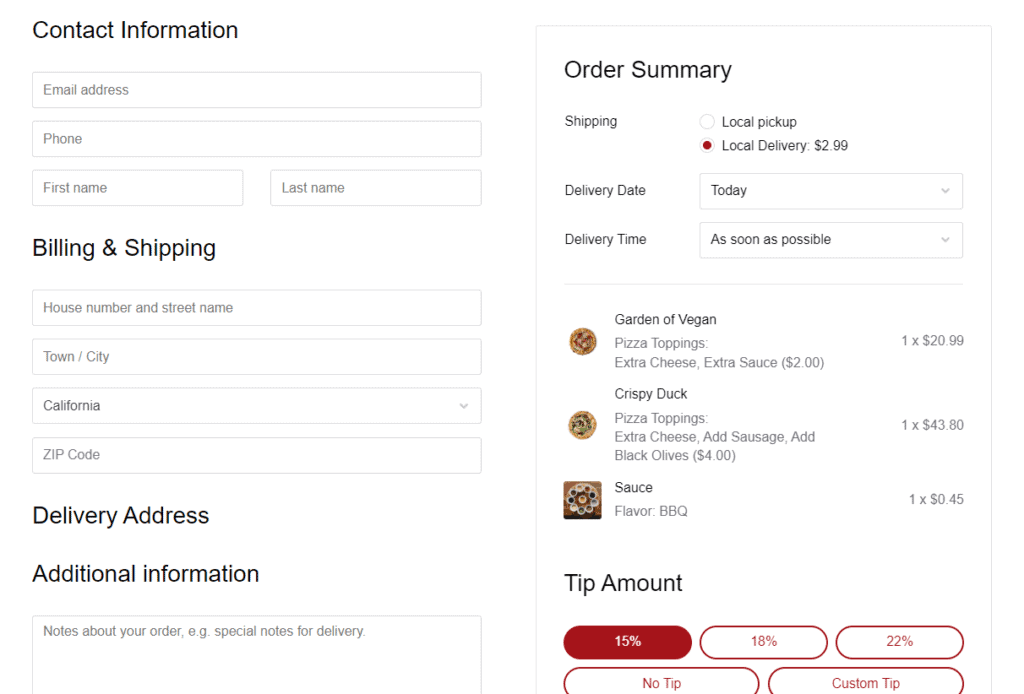
All the order details, including the name, address, date, type of service, total price, etc, will be available on a live order screen for your staff to see. This information is essential for order preparation and planning your own delivery logistics.
There’s a lot more about the Orderable plugin. But once you’ve decided on your menu items and the services you’ll offer, you need at least three pages to discuss your menu items and services in this section.
5. Marketing and sales strategy
Every business also needs a solid marketing strategy to bring in new customers, build its brand, and increase sales. This section of your coffee shop business plan explains how you’ll do that in the next three to four pages.
Branding and positioning
If you’re a small business, the first digital marketing tool you have up your sleeve is your website. It should be easy to use, mobile-friendly, and include online ordering if possible.
If you’re starting from scratch and need to set up a coffee shop website, check out our comprehensive guide on creating an impressive restaurant website from scratch.
Other marketing tools you need to use include:
- Email marketing. It’s the second most popular marketing channel you can use to build a mailing list. You can send updates, promotions, and events directly to customers on this list.
- Social media. Platforms like Instagram, Facebook, TikTok, and Instagram allow you to engage with your customers, showcase your offerings, and drive traffic to your coffee shop.
- Loyalty program. You can create a points system or digital punch card to reward repeat customers.
Want more detailed steps on creating a loyalty program? Check out our in-depth restaurant loyalty program guide.

Local marketing
If you’re a local business, you also want people in your area to know who you are. You can start by describing how you’ll get involved in the community. For example, you can host small events or support local causes. Doing this builds trust and spreads the word.
Other ways you can attract local foot traffic are to:
- Collaborate. You can partner with nearby bakeries to create special menu items or cross-promotions.
- Create a Google Business Profile. It helps your coffee shop show up in Google Maps.
- Print flyers and posters. Then, put them up in busy areas like co-working spaces, gyms, or campuses.
Pro tip: If you have a lot of detailed information, you may want to create a separate marketing plan document.
6. Financial plan
This part of your coffee shop business plan is important, especially if you’re applying for a bank loan or seeking potential investors.
You’ll need to show your small business can cover its costs, grow over time, and eventually become profitable. That’s because small coffee shops usually run on lower profit margins.
Start by outlining your startup costs
These are expenses you’ll need to open and renovate your coffee shop.
For example, your startup expenses may include furniture, coffee beans, a rent deposit, and marketing. Renovation may involve painting, new floors, and new countertops. With materials bought on sale and volunteer labor, the costs to renovate could be $5,000. Give a cost estimate (if possible).
The kitchen will also need equipment like espresso machines, coffee roasters, grinders, an oven, refrigerators, a POS system, etc.
On the digital side, you can factor in the cost of building your website and setting up an online ordering system.
Revenue streams
Once you’ve covered what it will cost you to get started, explain where your money will come from. Your revenue streams might include:
- Direct sales of coffee drinks, food, and other menu items.
- Online orders that are placed through your website or app.
- Extra income from branded merchandise or packaged coffee.
- etc
Check out our guide on creating an action plan to increase sales in a restaurant. You’ll learn which format to use and what to include in your action plan.
Financial projections
Your financial forecast and expenses section should include the following:
- Break-even analysis to demonstrate the sales you need in order to make a profit.
- Cash flow statement with monthly projections for all your coffee shop purchases.
- A pro forma balance sheet to give investors a snapshot of your assets, liabilities, and equity.
- An income statement that shows your revenue, operating expenses (such as rent, utilities, wages, marketing, etc), and net profit over time. This helps demonstrate your long-term profitability.
Pro tip: Dedicate a few pages for financial diagnostics as well. It can help you perform a few tests on your numbers to see if they seem within certain reasonable ranges. Only a human can do that.

7. Risk assessment and mitigation
This section of your business plan is here to show you understand the risks of running your coffee shop and creating a plan to deal with them.
Investors, lenders, or even partners want to know: What could go wrong, and what will you do about it? They want to know if their money is safe.
So, in this section, think about the factors that could make or break your business. Do you have resources in place if you have production problems or experience staffing issues? Do you have a plan in case of an economic downturn, inflation, or slow seasons?
Note: Every coffee shop business also needs an exit strategy. You can detail it in this section.
Overall, if you can show investors that you’ve already thought about the “worst-case scenarios” and have a plan to deal with them, you build their confidence in you.

8. Appendix
The appendix is the final section of your coffee shop business plan. It holds supporting documents. These documents are too detailed to include in the main sections, but are still important.
Here’s what typically goes into the appendix:
- A sample menu in full layout format.
- Floor plan or design mockups of the coffee shop (if any).
- Licences and permits for food handling, the health department, and a business licence.
- Resumes of the business owner(s) or key team members.
- Financial documents, including your income statements, balance sheet, and startup cost breakdown.
- Supplier agreements or sample contracts.
- Any market research or data you referred to (e.g., local market stats).
Only include what’s relevant and supports your business plan because not everything is required. However, the more organized and clear you are, the more seriously lenders and potential investors will take you.
Start planning your coffee shop today
Writing a coffee shop business plan helps you clearly outline what your business will do to succeed and pitch your shop concept to various stakeholders.
This guide explains each major section of a coffee shop business plan template to make it easier for you to plan your shop.
Online ordering is such a crucial part of a coffee shop business. We recommend using the WordPress plugin, Orderable, to offer online ordering services directly to your customers. This plugin is commission-free and adds a robust online ordering system directly to your website so you can provide local delivery and pickup services online.
We hope this guide provides you with the clarity and direction you need to write the perfect business plan for your coffee shop.
Gina Lucia is our in-house Content Manager at Orderable. She writes articles, user guides, technical documentation, and creates videos on everything WooCommerce and Orderable.
Gina has been working in the WordPress/WooCommerce space since 2012 when she developed WordPress websites for clients large and small.
For the past 8 years, she’s been writing about everything WordPress and WooCommerce, becoming an expert in what makes a WooCommerce store succeed.
When not writing, Gina loves to tend to her vegetable garden, read, or travel to mainland Europe.
Don’t miss out on the latest Orderable news!
Sign up for our newsletter to receive the latest news from the blog, you’ll get pinged every week with a digest of the latest updates.
[fluentform id=”6″]

Related Articles

How to Reduce Restaurant Food Waste in 2026

What is a Quick Service Restaurant in 2026?

How to Improve Your Restaurant Customer Journey
Get Your Restaurant Online With Orderable
The WooCommerce plugin designed to help restaurants take orders online – with no added fees!
View Pricing