
Local Restaurant Marketing: 8 Tips and Strategies

Local Restaurant Marketing: 8 Tips and Strategies

Gina Lucia

If you’re looking to get started with local restaurant marketing but don’t know where to start, this guide is for you.
With the right local restaurant marketing strategies, you can make your restaurant the go-to food joint for customers within your community.
👋 In this guide, we’ll walk you through 8 local restaurant marketing tips and strategies to attract more local customers and build a stronger, more loyal local customer base.
To be specific, here’s what we’ll cover:
- Why you should spend time developing your local restaurant marketing.
- 8 local restaurant marketing tips and strategies.
Whether you’re a new small business or an established one, you’ll find this local restaurant marketing guide useful. But before we get to the tips and strategies, let’s first understand the importance of local restaurant marketing.
Get Your Restaurant Business Online With Orderable
Orderable is a user-friendly WordPress plugin that adds online ordering to your restaurant website.
Add your dishes, create your online ordering menu, customize your delivery schedule, and manage orders with ease.


Why spend time developing your local restaurant marketing?
Let’s first understand what local restaurant marketing means.
Local restaurant marketing represents a set of marketing strategies geared toward attracting customers within your community. It is sometimes known as neighborhood marketing for local businesses or location-based marketing.
As the name suggests, it aims to attract more local customers and build a stronger, more loyal local customer base.
So, what makes local restaurant marketing important and poised to deliver results for your restaurant business? Let’s look at some of the reasons why you should spend time developing your local restaurant marketing.
It gives small to medium restaurants an edge
Your marketing strategies might be futile if they’re set up to go against large chain restaurants like McDonald’s or KFC. You have a better chance when you rival other local establishments.
📈 A local consumer sentiment study revealed that 82% of people would rather shop from a local business than a big national brand.
This is because local establishments connect better with local customers than large chain restaurants. For this reason, focusing on local marketing can give you an edge over large chain restaurants within your community.
Local marketing drives foot traffic and sales
Local restaurant marketing campaigns ensure your business appears when neighboring customers actively search for a place to dine. They not only empower new customers to find you but also take action.
📈 This is why it’s no surprise that 88% of potential customers who search for a local business call or visit within the first 24 hours.
A simple location-based push notification reminding customers that your business is open encourages them to drop by. And when they do, all you’re left with is to provide a great dining experience that will encourage them to come back.

It builds brand awareness
Thanks to local restaurant marketing, you can establish a strong local presence and make more people aware of your brand. You can do it by engaging with the local community through partnerships or hosting local events like bar mitzvahs, birthdays, music events, etc.
When the locals have a great time at your restaurant, they will spread the word about it and bring in more customers. This is a form of word-of-mouth marketing for your business.
It’s a cost-effective marketing option
While most forms of marketing require some form of investment, local restaurant marketing is best placed to get you more returns on investment. Local marketing allows you to target your efforts toward the most relevant audience: customers who live near you and are more likely to visit your restaurant.
When done right, local restaurant marketing can be your roadmap to success. In the next section, we’ll walk you through 8 effective local restaurant marketing strategies to help local customers find you and think of your restaurant whenever they want to eat, drink, or hang out.
8 local restaurant marketing tips and strategies
Are you ready to sell food to more customers in your neighborhood? Here are 8 tips and strategies to help you get going with local restaurant marketing.
Tip 1: Create your restaurant website
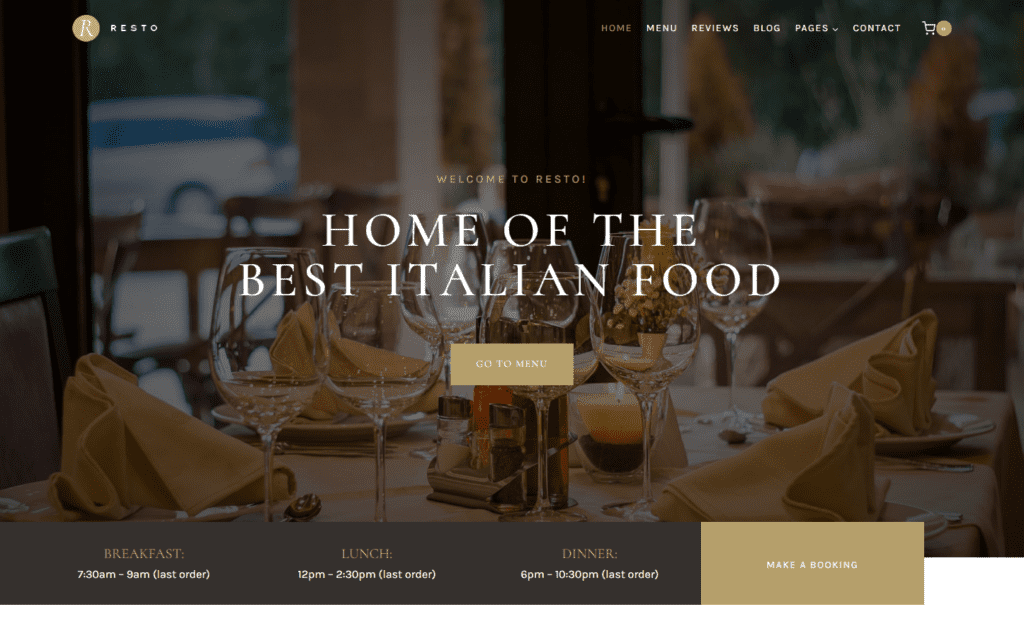
As a restaurant owner, having a website is the equivalent of setting up shop online, and having an online presence. There’s no shortage of data supporting your website’s importance to your local restaurant marketing efforts.
📈 One study found that 85% of customers visit a restaurant’s website before visiting it physically.
A restaurant website introduces and showcases your business to new customers, even when they’re nearby. Here’s the kicker. Your website forms the foundation of your local digital marketing efforts. It is involved in virtually everything, including running local ads, collecting and displaying reviews, etc.
If you don’t have one, creating a website should be the first thing you do to get started with local restaurant marketing. And you can do it easily with WordPress.
Create your restaurant website with WordPress
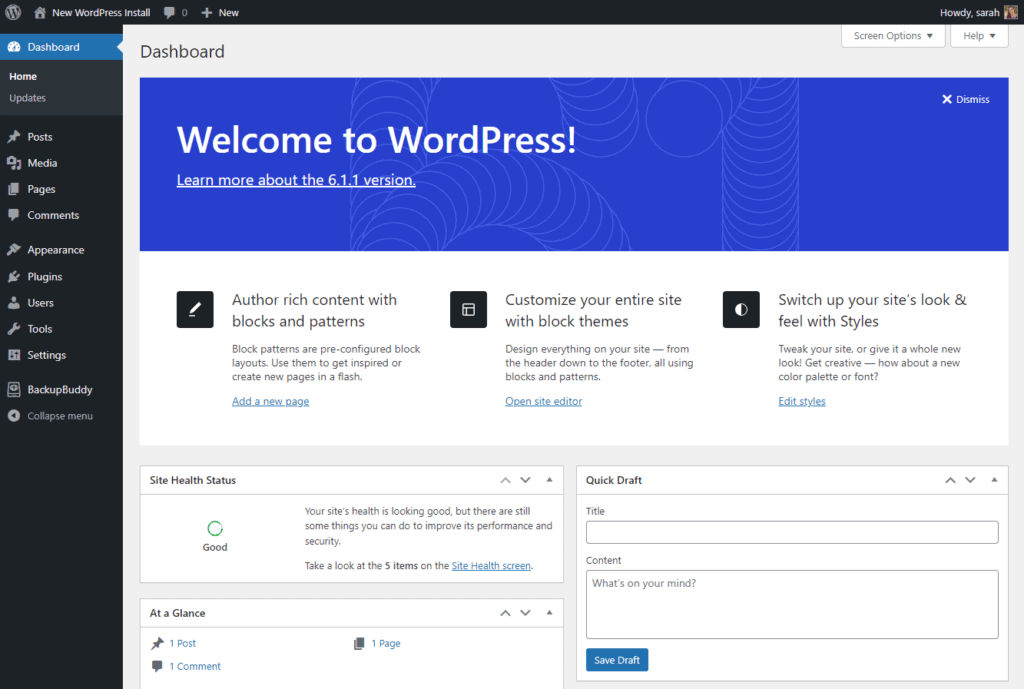
WordPress allows you to set up your restaurant website without writing any code. It comes with tons of themes and templates to get you started.
It is completely free, and after covering initial hosting and domain name costs, you can use it without paying any monthly fees.

When creating your restaurant website, you’ll need to prioritize the following pages:
- Homepage – This is where most customers will first encounter your business. So, it should be a priority to include high-quality photos of your food, a concise description of your restaurant, and a call to action.
- Menu page – This is where you showcase your food and drink offerings. It should be visually appealing, easy to read, and with clear descriptions. If possible, make it downloadable.
- Contact page – This is for customers to reach out in case of inquiries.
After creating your restaurant website, add an online ordering system to allow customers to place takeout or delivery orders.
You can’t do this with the default WordPress setup, though. You’ll need the help of the WordPress plugin Orderable.
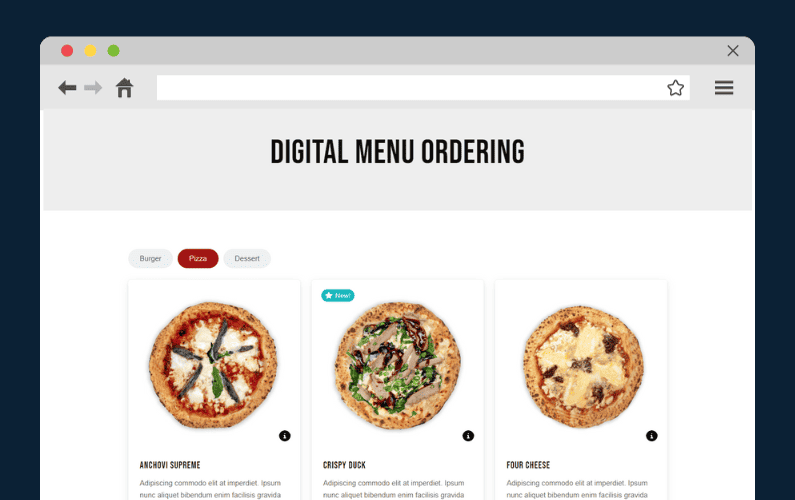
Add an online ordering system to your restaurant website with Orderable
With Orderable, you can add a powerful online ordering system to your restaurant website. It allows you to easily set it up and provide your customers with user-friendly online ordering.
It enables you to take full control over the ordering process, including:
- Creating a schedule that works for you. With Orderable’s time slots, you can set times when you’re available to deliver or have orders ready for local pickup. This is convenient for you and your customers.
- Creating your menus. It comes with ready-made product layouts you can use for your menus. All you have to do is add menu items. You can also edit their design to match your website or your restaurant’s ambiance.
- Managing your orders. Orderable has a live order management screen that informs you when orders come in real-time. This allows you to keep everything running smoothly and avoid any delays.
Get Your Restaurant Business Online With Orderable
Orderable is a user-friendly WordPress plugin that adds online ordering to your restaurant website.
Add your dishes, create your online ordering menu, customize your delivery schedule, and manage orders with ease.
Apart from these, you can also do the following with Orderable.
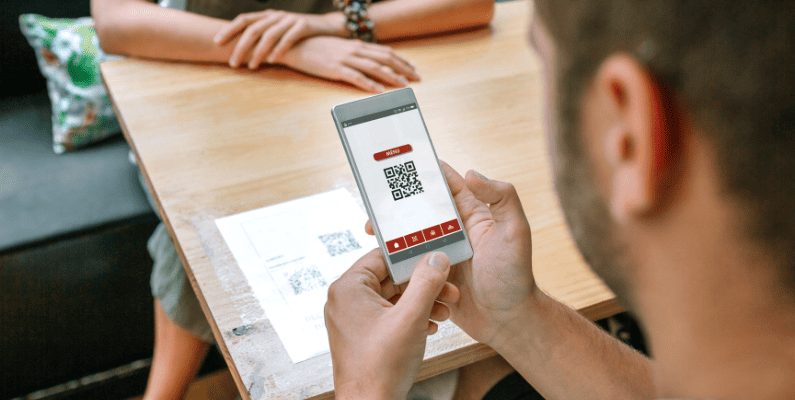
Improve your dine-in services with table ordering
Orderable enables you to print QR codes and assign them to each table in your restaurant. When customers scan them, your menu will pop up on their phones, and they can place their orders.
This saves dine-in customers time as they don’t have to sit around waiting for a server to come and take their orders.
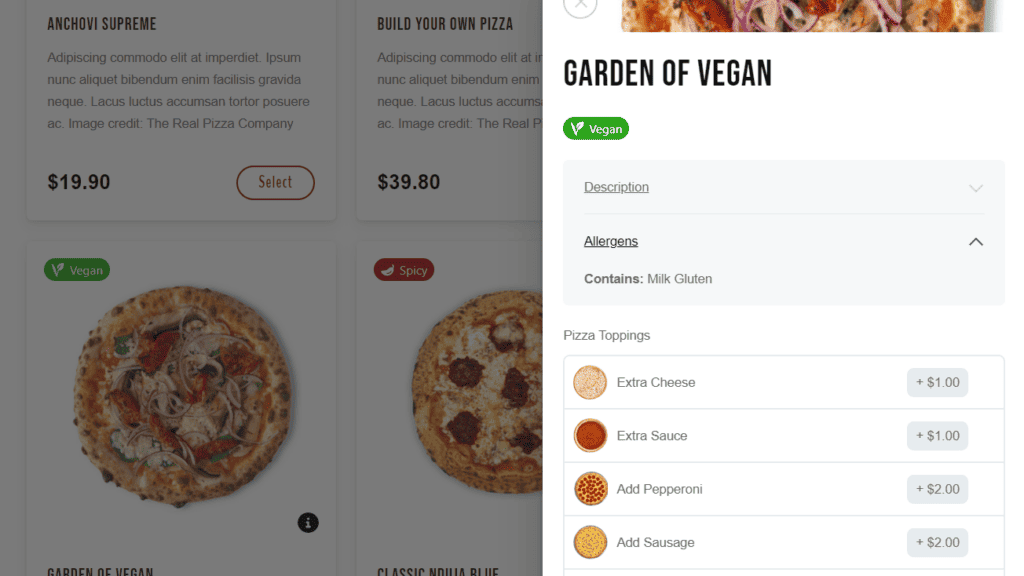
Improve customer experience to keep them coming back
Orderable’s app-like design makes ordering from your restaurant website as smooth as it can be. Customers can do it from their preferred device, which makes for a hassle-free experience.
When they do, you can send them updates on their orders via the platforms they use every day, such as SMS and WhatsApp. You also add dietary product labels (for example, vegan, gluten-free, etc.) to your menus and make it easy for customers to find them.
The best part? Orderable charges no extra fees per transaction. You’ll keep your hard-earned money to yourself.
After creating your website, set up your Google Business profile to help local customers find you easily.
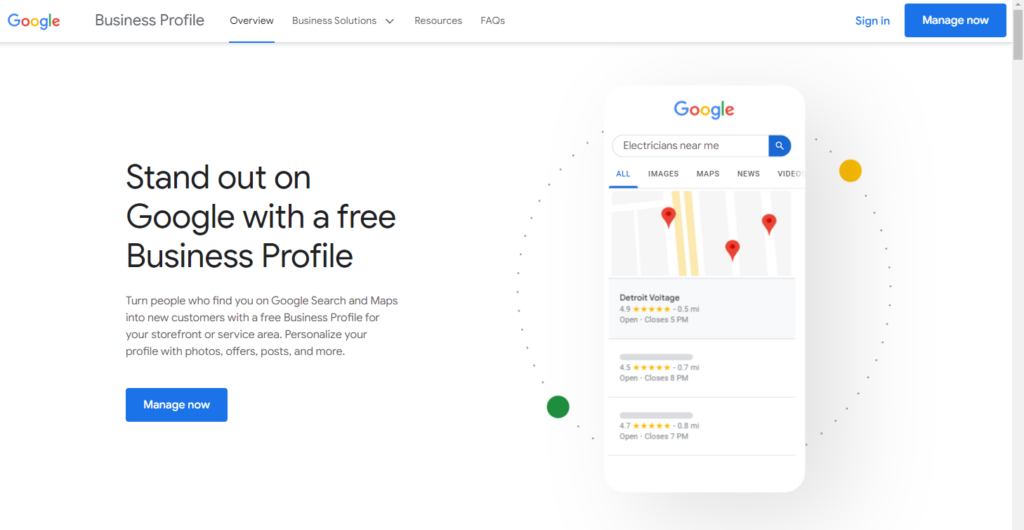
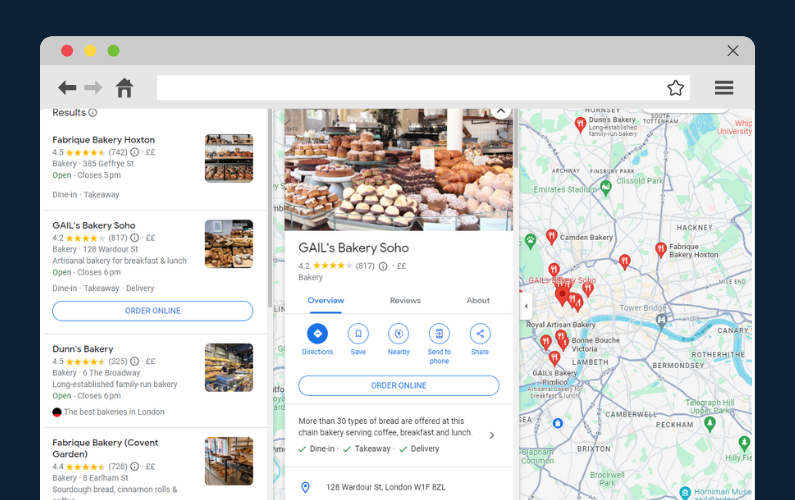
Tip 2: Set up and claim your Google My Business profile
Google My Business (GMB) is a free tool for creating a listing of your restaurant on Google. When you set up and claim your GMB profile, local customers can find your business via Google Search and Maps.
But why is it important to have your restaurant listed on Google?
📈 There are over 3.5 billion searches on Google, and nearly 50% of them are for local businesses.
What’s more, Google prioritizes local search results whenever possible. This means that setting up your Google Business profile gives your restaurant a good chance of being found by local customers.
Once customers find your restaurant, they can see important information about it, including its specific location on the map, phone number, star rating, and opening hours. They can also visit your website or call to make inquiries.
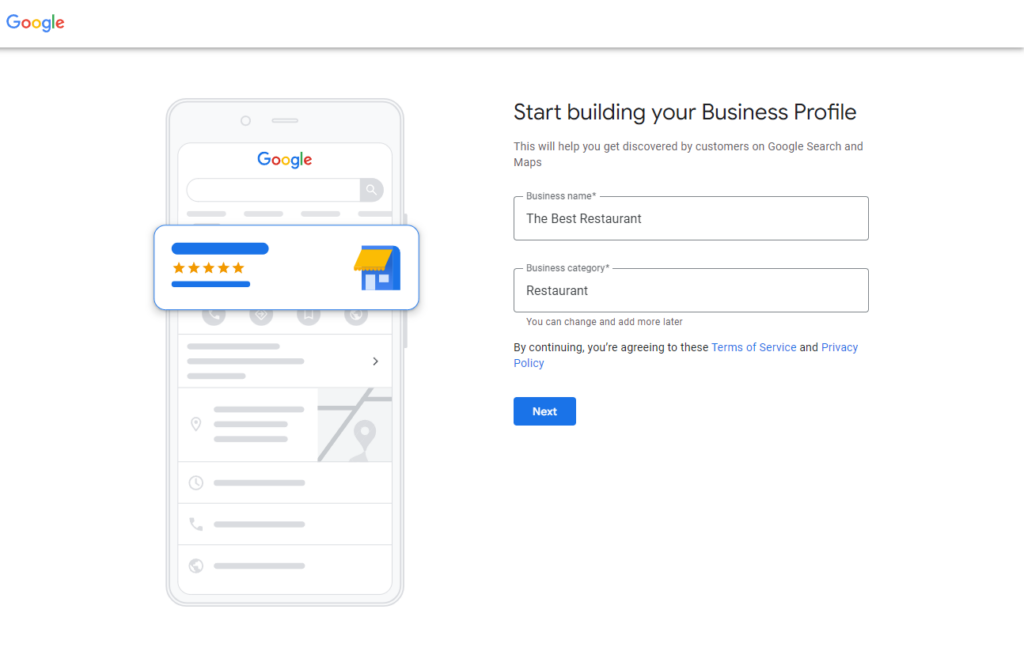
How to set up and claim your Google My Business profile
To set up a GMB profile, you’ll have to first visit www.google.com/business and sign in with your Google account.
Add the details of your business, including its name, the restaurant industry you’re in, its location, and its service areas.
After providing these details, you’ll need to verify that the business is yours via phone, email, or instant verification. Finally, you’ll complete your profile by adding your menu, photos of your food, and an interior and exterior view of your restaurant.
💡 This is a more condensed version of our bigger guide on Google Restaurant Review Tips for businesses. If you want to dive deep, that guide covers everything you need to know.
This wouldn’t work without a plan, so let’s see how to prepare one in the next section.

Tip 3: Put together a restaurant marketing plan
If you want your local marketing strategies to succeed, you should create a restaurant marketing plan. It maps out how you’ll execute these strategies efficiently and measure whether they’re getting you the desired results.
📈 A CoSchedule Trend report revealed that marketing campaigns are 331% more likely to report success when they’re proactively planned.
Seeing as the numbers back it, it would greatly benefit you to set up a restaurant marketing plan.
To put together a marketing plan for your local marketing efforts, you’ll need to do the following.
1: Set your marketing plan goals
Your ultimate goal is for your marketing campaign to be successful. But what does that success look like to you?
While it’s quite difficult to pinpoint success, you can look at it this way:
- Your sales, revenue, and profit margin have gone up.
- There is an increase in foot traffic in your restaurant.
- You’re retaining more customers, and so on.
Set measurable goals that you can easily track and determine their effectiveness later on. For instance, you could say you want to retain 500 more customers in the following month and increase customer retention by 15%.

2: Understand your target audience
Conduct market research while focusing on local residents. Remember, your target market is people who live, work, or visit your surrounding area.
Factor in their demographics, including their average income level, ages, and dining preferences. You can use this information to tailor your messaging and offerings to resonate with them.
3: Look into your competitors
As part of your market research efforts, you should also investigate similar restaurants in the area. Pay special attention to the best restaurants and analyze their strengths and weaknesses, the strategies they use, etc.
This will help you differentiate your restaurants from the rest and identify new marketing opportunities.

4: Develop your marketing strategies
Everything else we’ve covered in this guide is vital to your local marketing strategy.
However, we would like to give a special mention to:
- Collaborating with local businesses that complement yours, like bars, dessert shops, and grocery shops.
- Getting involved in the local community by sponsoring events, offering catering services, etc.
- Running local Facebook ads or Google ads to target customers within your region effectively.
This will help you build a strong local presence.
5: Monitor and adapt
Are your marketing efforts yielding the right results? Track sales, revenue, website traffic, social media engagement, etc., to see what works and needs improvement. Analytics tools like Google Analytics can help you do this. Based on your results, adjust your approach as needed.
💡 This is a condensed, takeaway-focused summary of our guide on how to put together a restaurant marketing plan.
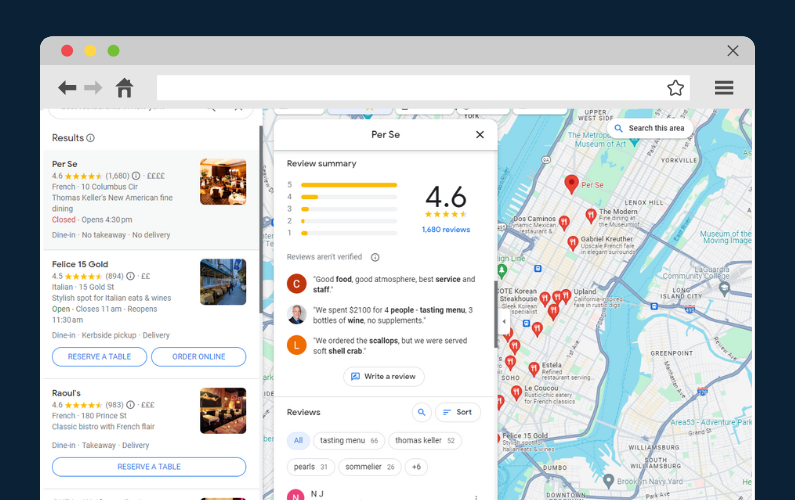
Tip 4: Put a restaurant review strategy
We’ve seen that your restaurant reviews appear on local search results when your business is listed on Google My Business. But did you know that 98% of customers read reviews before visiting or ordering from a restaurant?
Reviews are extremely important in your local marketing efforts because customers actively look for them.
📈 What’s more, they help to get potential customers over the line as 49% of customers trust them as much as personal recommendations.
As a result, you need to implement a strategy to get more reviews and respond to both positive and negative reviews.
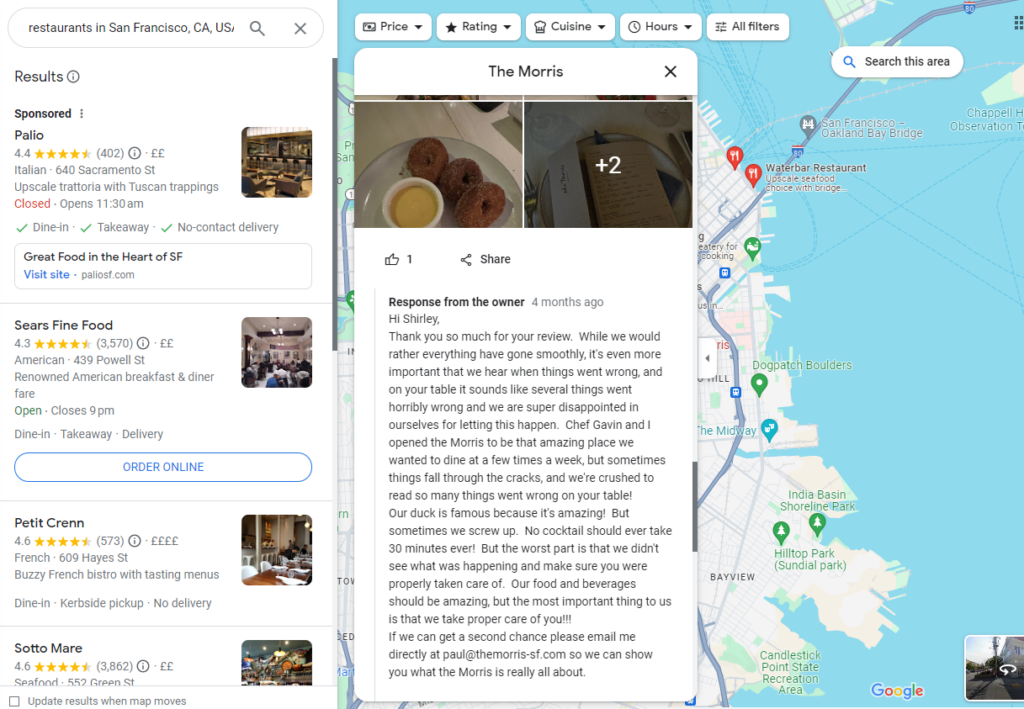
How to implement a customer review strategy that boosts your online reputation
Creating a review strategy is quite simple. First, set up your restaurant’s account on review platforms like Yelp and TripAdvisor. Then, you need to encourage customers to leave reviews and respond to all of them – good or bad.
Encourage customers to leave reviews
You probably won’t get positive reviews if you don’t explicitly ask for them. So ask for them after a customer has enjoyed a meal from your restaurant. You can do it using prompts on your restaurant website or sending them follow-up emails asking them to share thoughts on their experience.
Make this process simple because the easier it is to leave a review, the more customers will do it.
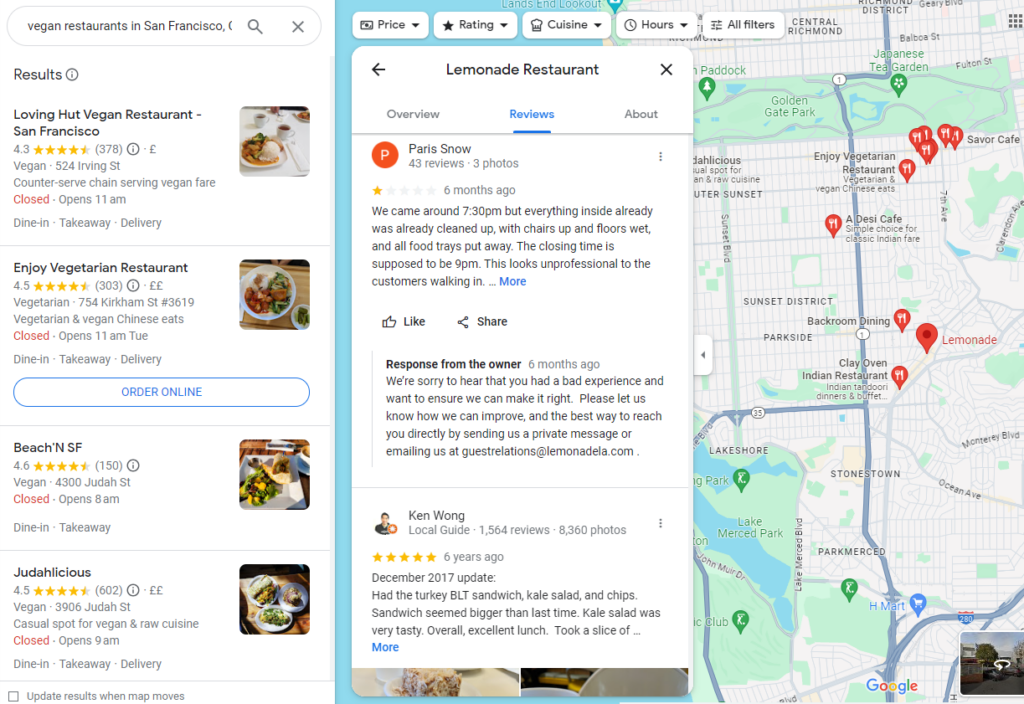
Respond to all reviews – good or bad
Take time to respond to positive reviews. It could be the first step to building long-term customer relationships.
First, thank them for leaving a review. Instead of a generic ‘Thanks for your review,’ you can go further and personalize your response. Mention the specific details they praised and take this opportunity to invite them back to your restaurant.
On the other hand, respond politely, as quickly as you can, to negative reviews. It shows that you take their feedback seriously. Acknowledge their experience and offer a sincere apology.
Close this up with a way to make amends, for instance, by offering a refund or a discount on a future visit.
💡 We have a dedicated guide on restaurant review tips for businesses that you can use to handle reviews on your restaurant. Next, we’ll see how to optimize your restaurant for local searches.
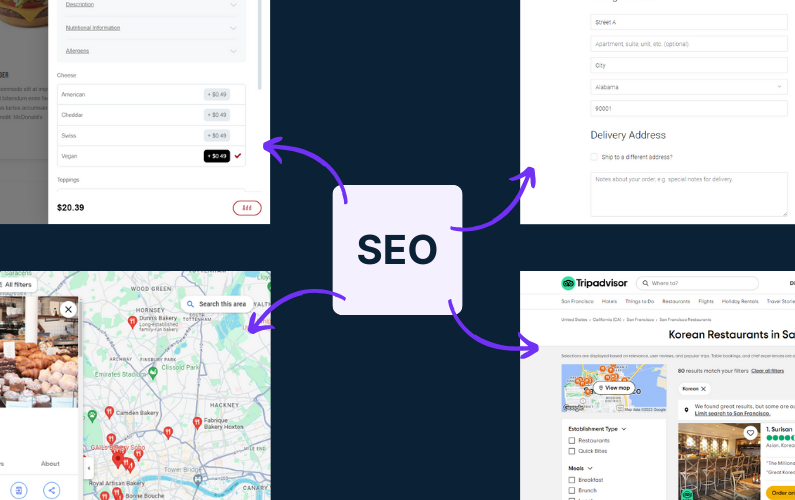
Tip 5: Work on your restaurant’s local SEO
As nearly half of Google searches aim to find local businesses, local SEO is an indispensable tool for your restaurant marketing efforts.
But what is local SEO? It is a set of search engine optimization techniques for attracting customers within a location.
Local SEO aims to improve your visibility in local searches and help local customers find you easily. You could have the best spot in town, but if no one nearby can find it, no one will probably come. But this won’t be the case when you implement local SEO properly.
📈 Studies show that 76% of customers who search for a restaurant online will most likely visit it on the same day. This proportion goes up when the restaurant is near them.
How to improve your restaurant’s local SEO
Some of the things we’ve covered help to improve your restaurant’s local SEO. These included setting up and updating a Google My Business profile, link building through local partnerships, and developing a review strategy.
Apart from these, here are other things you can do to improve it.
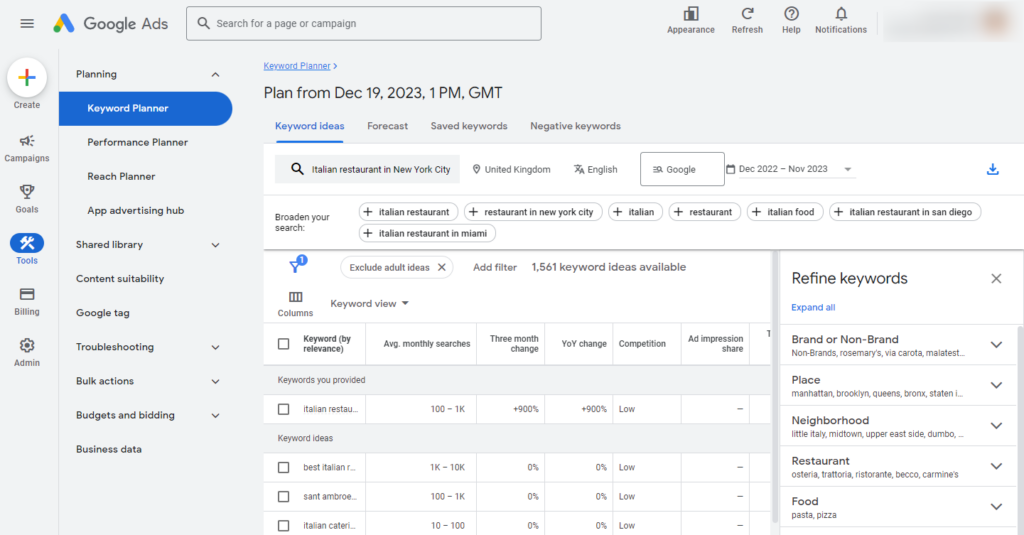
Use localized keywords throughout your site
Use keywords that show where your business is located in your product titles, descriptions, page titles, headings, etc. For example, the best pizza shop in Pigeon Town, New Orleans. This tells search engines where your restaurant is located.
Focus your content marketing locally
Since you want to attract local customers, you’ll need to create content that interests them. So, it’s a good idea to create blog posts covering local topics. For example, if you have a pastry shop in New Orleans, you can create blog posts covering local events like the New Orleans Jazz and Heritage Festival.
💡 Our local SEO for restaurants guide covers all this and more. Be sure to check it out to learn more.
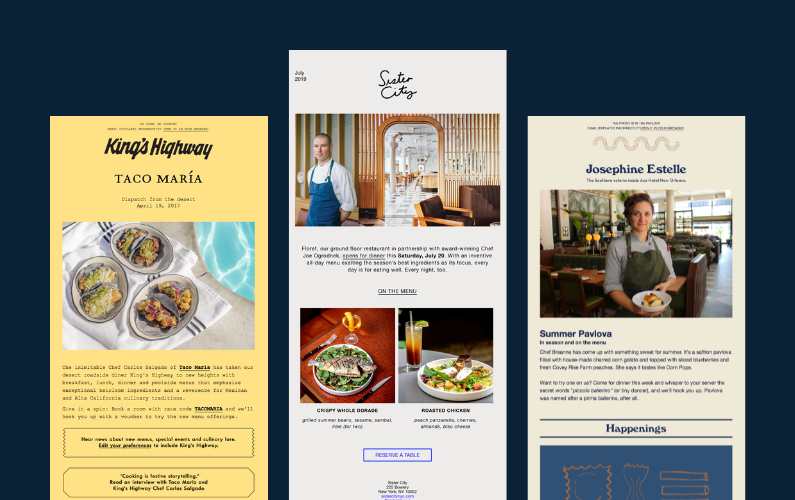
Tip 6: Work on a local email marketing plan
Email marketing is always important, whether you’re targeting local or global customers. It is one of the most successful strategies because customers check their emails daily, and promotional emails have a high click-through rate.
📈 To confirm this, one study found that each dollar spent on restaurant email marketing has a generous return of up to $38. This makes working on your local email marketing plan worthwhile.
Luckily, local email marketing is simple, and it doesn’t eat into your marketing budget. Here’s how you can use emails as a local marketing channel for your restaurant.
How to work on your local email marketing plan
First, you’ll need to choose a reliable email marketing tool like MailChimp or Sendinblue and connect it to your restaurant website. Next, you can get creative with your email marketing ideas but focus on targeting customers within your area this way.
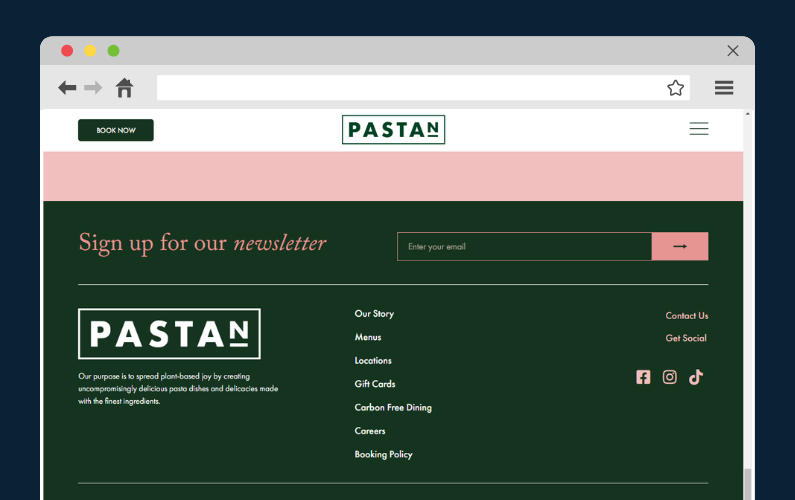
Create an opt-in on your website
This is a form that asks customers to sign up for your email newsletter or promotional emails. This is a great way to capture leads you can target whenever you have restaurant promotions.
Create a welcome email sequence for new signups
After customers sign up, your email campaign starts! Welcome them with a thank you message and useful resources like your menu, a glowing testimonial, and contact details.
You can also offer a discount or other incentives to get them going.
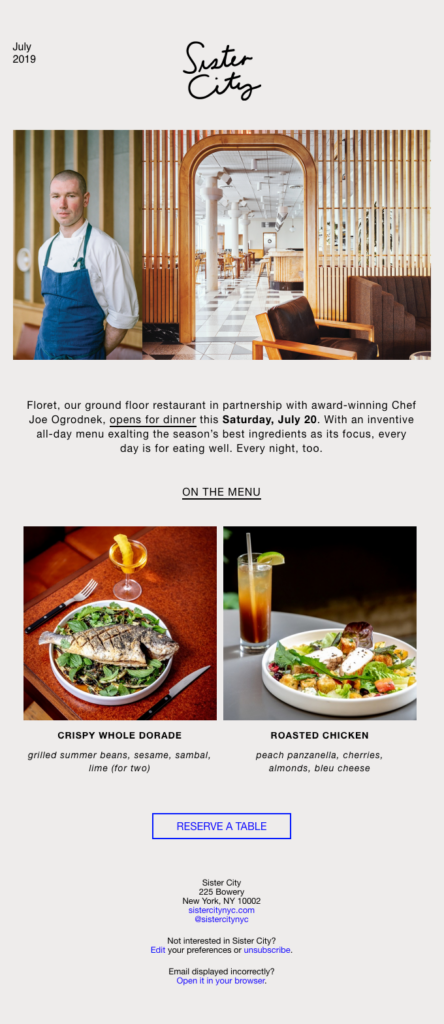
Send promotional emails highlighting events
Is your town having a music festival or other celebration? If so, send potential customers promotional emails highlighting these events.
When it comes to email content, invest in intriguing subject lines, use high-quality images, and include clear calls to action.
💡 This is a summary of the many things you can do. Explore the rest in our email marketing for restaurants guide.
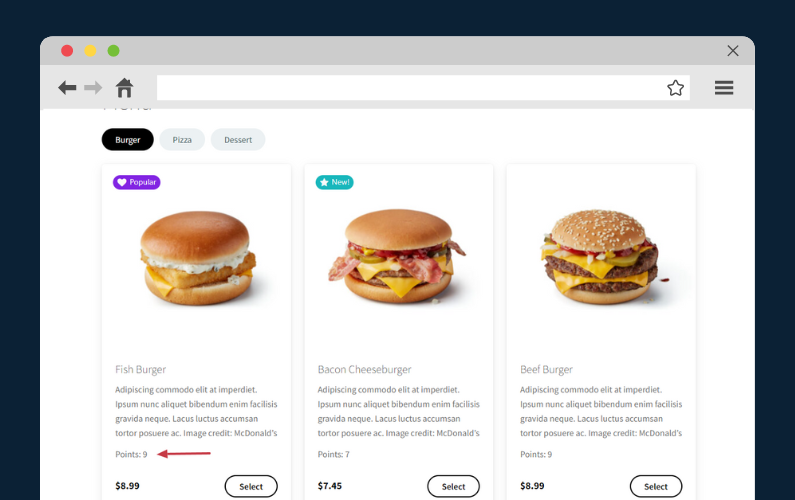
Tip 7: Put a loyalty program in place
With a loyalty program, you’ll reward local customers for dining at or ordering from your restaurant. The rewards inspire customer loyalty by incentivizing them to return and engage with your restaurant business.
📈 They’re pretty effective at it, too, as studies show that loyalty program members visit restaurants 20% more frequently and spend 20% more than non-members (QSR Magazine).
It helps create loyal customers who spend more on your business and guarantee long-term revenue.

How to create a restaurant loyalty program
You can implement a loyalty program in a simple 3-step process:
- Determine the type of loyalty program you’ll create.
Depending on the nature of your restaurant, you can pick between a point-based, tired, visit-based, or subscription. For instance, in a point-based system, customers earn points each time they buy food from you. These points can be redeemed for a variety of rewards.
- Pick your rewards.
Decide how you’ll reward your customers. This could be free meals, free deliveries, exclusive discounts, etc., after customers accumulate a certain number of points. Or a “Bring-a-friend” bonus discount for customers who bring in a new friend.
- Promote your program.
Feature it prominently on your restaurant website. You can use a dedicated section or a banner highlighting the benefits of joining the program. Let customers understand the benefits of being loyal to your restaurant brand right away.
💡 This is an overly simplified version of what you’ll have to do, but we’ve covered everything in detail in our restaurant loyalty program guide.
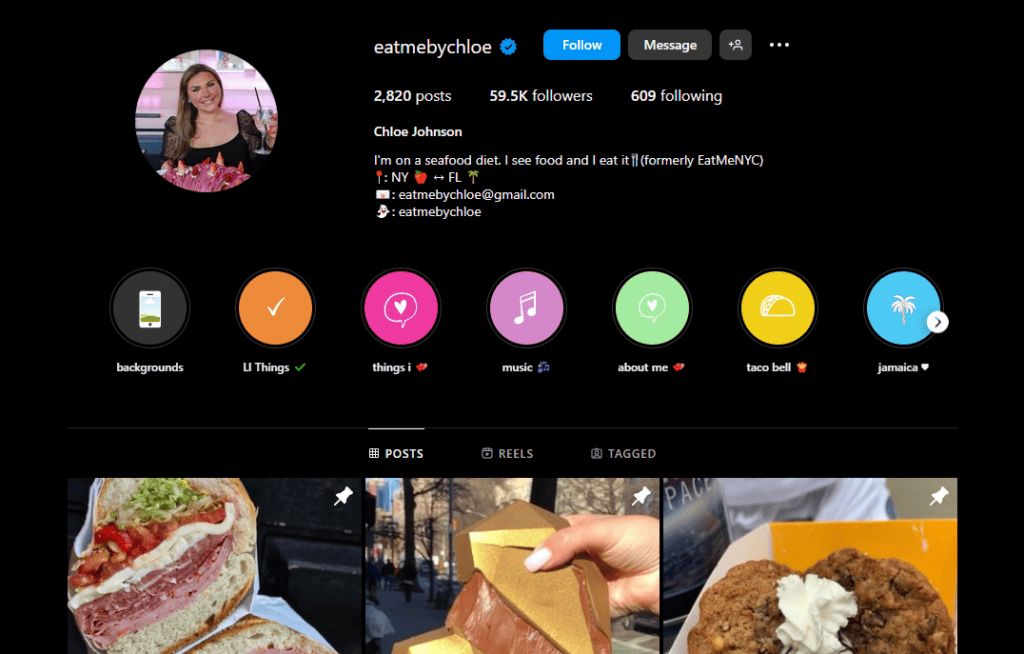
Tip 8: Make use of local social media influencers
Whether local or global, influencers significantly impact how their audience perceives your restaurant. Local influencers can sway opinions about your restaurant with a post or two on their social media accounts.
This is why you shouldn’t overlook influencer marketing when developing your local restaurant marketing ideas.
How to utilize local social media influencers to promote your restaurant
If you want to leverage local influencers to promote your restaurant, here’s how you do it.
1. Find local influencers
An easy way to find them is to look for relevant hashtags on social media platforms like TikTok, Instagram, etc. For example, search for “#[your city]foodie” or “#[your city]eats” and see who’s using these hashtags and creating engaging content about food.
You can also perform location-based searches, for instance, food bloggers or reviewers in your area.
2. Qualify them
Filter out influencers based on their engagement rate and audience demographic. Also, see if their content style aligns with your brand.
3. Reach out to them
Approach the influencers who qualify just like you would approach a business partner. Create a personalized message and be clear about what you’re offering them as an incentive to partner with you.
4. Build relationships
Influencer marketing shouldn’t be a one-time transaction. Focus on building relationships with influencers so they can promote your business enthusiastically in the long term.
💡 Want more in-depth tips to help with influencer marketing? Read our how to find and talk to restaurant influencers guide.
Get to grips with your local restaurant marketing today
A strong local presence is essential to the success of your restaurant. With the tips and strategies we’ve discussed, you can work on attracting and keeping customers who live, work, or visit your immediate area.
As you’ve seen, there’s a lot you can do to promote your restaurant business locally. But it all starts with creating your restaurant website and adding an online ordering system.
Orderable enables you to add a powerful online ordering system to your restaurant website and start taking orders from local customers. With Orderable, you can allow them to place orders for local pick-up or delivery and handle dine-in customers efficiently.
Add Orderable to your local restaurant marketing plan to create opportunities for more sales, revenue, and growth potential.
Get Your Restaurant Business Online With Orderable
Orderable is a user-friendly WordPress plugin that adds online ordering to your restaurant website.
Add your dishes, create your online ordering menu, customize your delivery schedule, and manage orders with ease.
Gina Lucia is our in-house Content Manager at Orderable. She writes articles, user guides, technical documentation, and creates videos on everything WooCommerce and Orderable.
Gina has been working in the WordPress/WooCommerce space since 2012 when she developed WordPress websites for clients large and small.
For the past 8 years, she’s been writing about everything WordPress and WooCommerce, becoming an expert in what makes a WooCommerce store succeed.
When not writing, Gina loves to tend to her vegetable garden, read, or travel to mainland Europe.
Don’t miss out on the latest Orderable news!
Sign up for our newsletter to receive the latest news from the blog, you’ll get pinged every week with a digest of the latest updates.
[fluentform id=”6″]

Related Articles

What is a Quick Service Restaurant in 2026?
How to Create Custom WooCommerce Product Badges

Should You Offer Black Friday Restaurant Deals This Year?
Get Your Restaurant Online With Orderable
The WooCommerce plugin designed to help restaurants take orders online – with no added fees!
View Pricing